
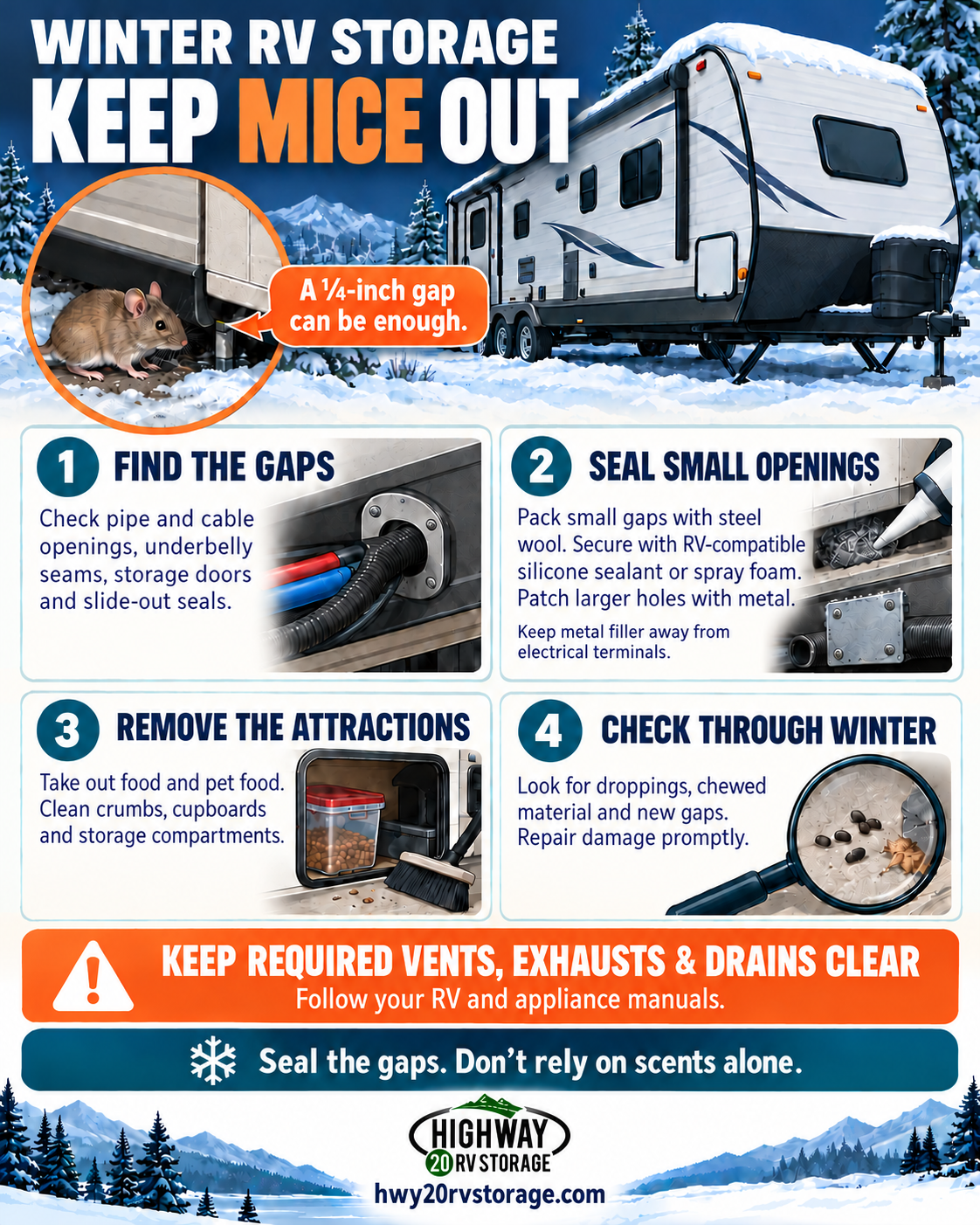
A small opening can become a big problem during winter RV storage. Mice can squeeze through gaps about ¼ inch wide, giving them access to hidden spaces where they can nest and damage insulation, upholstery and wiring.
Before putting your RV away, add a rodent-prevention inspection to your winter storage checklist.
Use a flashlight to inspect around plumbing and cable entry points, underbelly seams, storage compartment doors and slide-out seals. Inside, check beneath sinks and around openings where pipes or wiring pass through the floor.
Look for damaged seals, loose panels and gaps connecting the outside to interior spaces.
Pack small openings with steel wool and secure it with RV-compatible silicone sealant or spray foam. The metal provides the barrier; foam alone should not be your only defense. Patch larger openings with securely attached metal.
Check that the sealant is suitable for the surface. Keep metal filler away from electrical terminals, and never block required ventilation, appliance exhausts or drains. Follow your RV and appliance manuals before modifying any opening.
Take food and pet food out of your RV before storage. Vacuum crumbs, wipe cupboards and clean beneath cushions and inside storage compartments. Empty trash and remove unnecessary paper or cardboard that could become nesting material.
Rodent prevention does not end when you park. Check periodically for droppings, chewed materials, damaged seals and new openings. Address signs of activity promptly.
Scented products do not close entry points. Put your effort into physical barriers, cleaning and regular inspections.
Save our infographic as a reminder before storing your RV. This checklist complements your normal winterization routine, including protecting plumbing from freezing.
Learn more about Highway 20 RV Storage at https://hwy20rvstorage.com.